How Hedepy AI protects your session information
Therapy depends on trust. If you choose to use Hedepy AI, it is natural to want to know what happens to information from your session, who can access it, and how it is protected. This article explains the most important safeguards in plain language.
Hedepy AI is optional
Hedepy AI is not automatically enabled. Transcription can begin only after both the client and the therapist have agreed to use it. If either person has not given consent, the session is not transcribed.
The feature is currently available for supported online sessions hosted through Hedepy's secure video-call technology.
What happens during a session
When transcription is active, the audio from the call is processed in real time to create text. Hedepy AI does not create or store an audio or video recording as part of this process.
The live call and speech-to-text processing use specialised technology providers, including LiveKit and Deepgram. The resulting transcript is then protected before it is stored.
Each participant has control over their own transcript copy. A therapist and a client do not share one jointly accessible transcript.
Your transcript is encrypted before it is stored
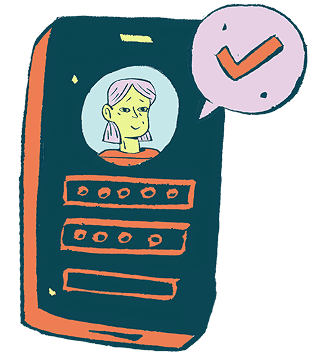
Your transcript is encrypted directly in your browser using a passphrase that you create. Hedepy uses the recognised AES-256-GCM encryption standard, and the encryption key is derived securely from your passphrase.
Only the encrypted version of the transcript is sent to transcript storage. The passphrase itself is not sent there or saved there. This means the storage service holds unreadable encrypted data rather than the plain text of your session.
You need your passphrase to unlock the transcript. Because Hedepy does not store it for you, a lost passphrase cannot be recovered and the existing transcript cannot be opened through the normal product flow.
When Hedepy AI works with your transcript
Encryption protects the transcript while it is stored. When you unlock it and actively ask Hedepy AI to analyse it or answer a question, the relevant text must be processed in readable form for that request.
Hedepy's AI service uses Anthropic's Claude models to generate these responses. Only the information needed for the requested AI feature is processed. AI chat history is also encrypted before being stored, and individual AI conversations can be deleted in the product.
Who can access the information?
Other clients and therapists cannot access your transcript. Access to stored transcripts is tied to the authenticated Hedepy account that created them.
The transcript storage service cannot read the encrypted content without the user's passphrase. However, no responsible service should claim that data is never processed by anyone under any circumstances. The relevant text is processed when a user actively asks Hedepy AI to work with it, and a limited amount of information may also be handled by authorised Hedepy personnel or technology providers where necessary to operate the service, provide support, protect safety, meet legal obligations, or investigate a technical problem.
You remain in control
You can stop transcription during a session. To withdraw your AI or personal-data consent, or to request deletion of your stored transcripts, contact Hedepy Customer Support. The support team will guide you through the current process.
AI chat conversations can also be deleted individually inside the product.
AI supports therapy—it does not replace your therapist
Hedepy AI is designed to help you reflect on a session and work with the information discussed in it. Like every AI system, it can misunderstand context or produce an inaccurate answer.
Its output is therefore supportive, not a diagnosis or a replacement for your therapist's professional judgement. If something in an AI response concerns you or does not feel right, discuss it with your therapist.
A simple summary
- Hedepy AI is optional and requires consent from both participants.
- The feature transcribes the call in real time; it does not make a stored audio or video recording.
- Your transcript is encrypted in your browser before storage.
- Your passphrase is not stored with the transcript.
- The transcript is processed in readable form only when needed to provide an AI feature or in limited operational, safety, support, or legal circumstances.
- You can contact Customer Support to withdraw consent or request transcript deletion.
- Hedepy AI supports therapy but does not replace professional judgement.
If you have questions about Hedepy AI or want to exercise your privacy rights, please contact Hedepy Customer Support or refer to Hedepy's Privacy Policy.
Te gândești să încerci terapia?

Ce este psihoterapia? Și pentru cine este?

Prima ședință de terapie: Cum să te pregătești și la ce să te aștepți

Terapia online funcționează cu adevărat? Nu sunt mai eficiente ședințele față în față?
Despre terapie
Te-ar putea interesa
Dacă starea ta emoțională este o amenințare la adresa ta sau a celor din jurul tău, te rugăm să suni la 112.
Terapeuții noștri sau Hedepy s.r.o. nu sunt responsabili pentru starea ta de sănătate.